
Designing storage that works beautifully in real life
Most homeowners plan their wardrobes by considering the doors, finishes and colour of the cabinet. However, the interior is what actually determines how the wardrobe functions every day. A well planned interior should be easy to use, clutter-free and tailor-made to your daily routines, rather than an obstacle you have to navigate.
Below, we will show you how to approach planning the interior of your bedroom wardrobe properly with information about layout, storage zones, and the finer points that can make a wardrobe go from good enough to great.
1. Start With How You Actually Use Your Wardrobe
Before deciding on the design of a wardrobe’s interior space, or its components, such as shelves, drawers, etc., take a moment to reflect on your behaviour.
Ask yourself about:
- The type of clothing you primarily store in your wardrobe.
- Do you hang most of your clothes or fold them?
- Are there many long garments (dresses, coats), or is it mostly short garments (jackets, shirts)?
- What clothes do you typically pull out every day, and what ones are less frequently used?
- Does anyone else also use this wardrobe, and if so, how will you divide the space to meet both people’s needs?
The layout of a practical wardrobe interior begins with your actual usage of the space, not your presumptions. The reason for this is that when designing the interior based upon real usage patterns, the space can feel like an extension of your normal daily behaviours, not something that requires you to make continual adjustments.
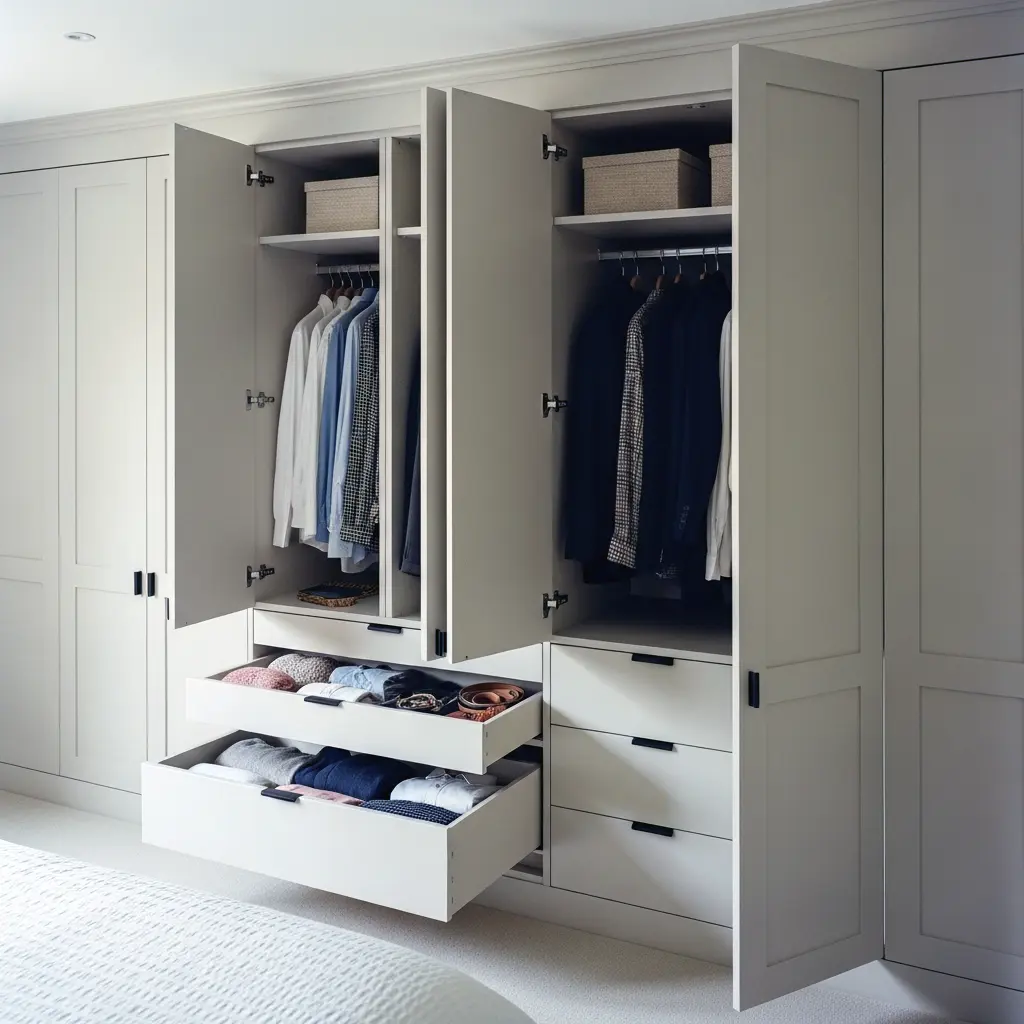
2. Zone the Interior for Everyday Efficiency
A good wardrobe will have several “zones” of space for your clothes. Each zone is designated as such because of its intended use.
Common areas include:
- Longer hanging spaces for longer garments (dresses, coats) and longer hangers for longer garments (shirts)
- Shorter hanging spaces for shorter garments (jackets, tops) and shorter hangers for shorter garments (jackets)
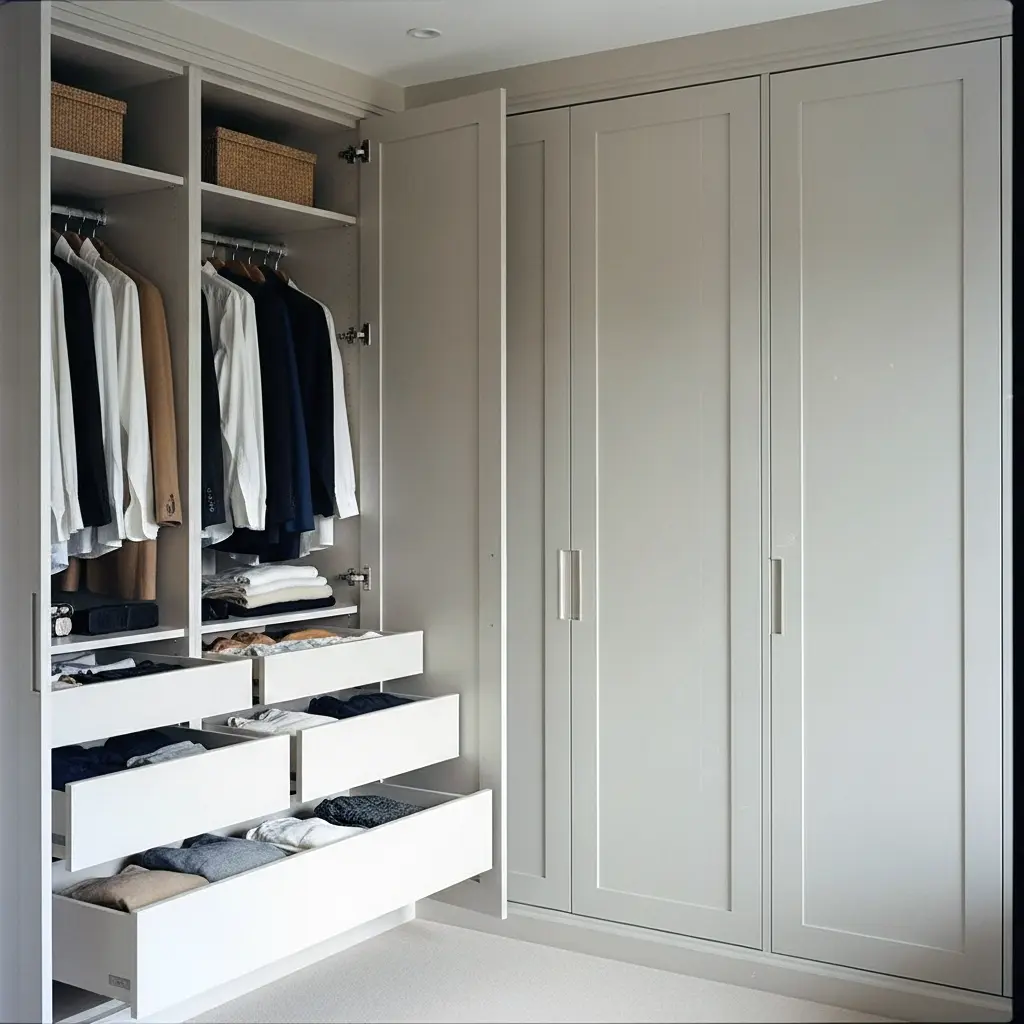
- Drawers are great for folded items (undergarments, nightwear, athletic wear, etc.)
- Shelves can be used for storing items that are best kept upright (knitwear, bags, jeans, seasonal items, etc.)
- Accessories like shoes, belts, jewelry and/or watches can also have their own designated area.
The benefits of zoning are reduced clutter and faster daily routines. When everything in the wardrobe has an assigned place, it makes everything feel more organised, less stressful and easier to manage.
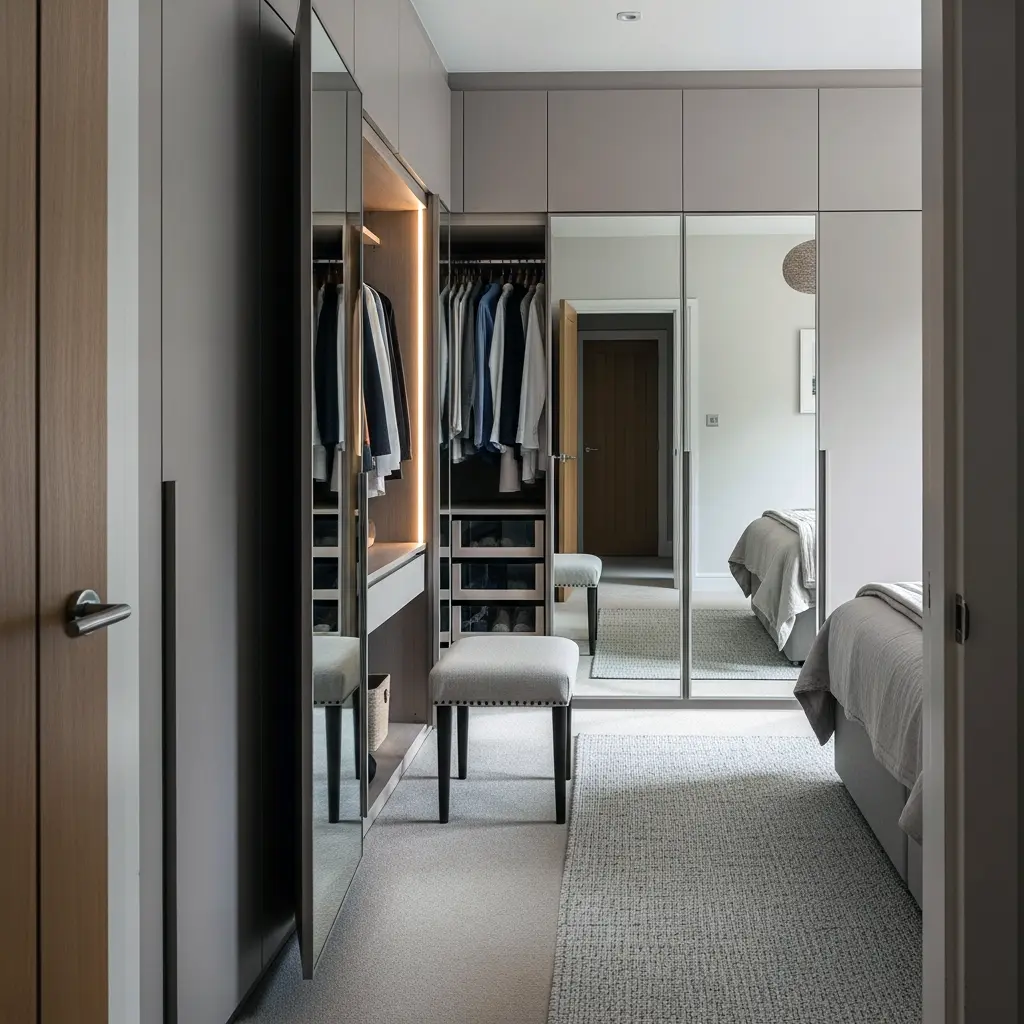
3. Tailor Rail Heights and Drawer Dimensions
The most significant disadvantage of stock wardrobes is the rigid standard dimensions that they use; rails are at standard heights and drawers have standard depth to facilitate mass production, not to fit the needs of individual households.
When using bespoke (custom) designs for wardrobes:
- You can choose the height of your rails to suit your clothes.
- Your drawer sizes will be based on the size of the items you intend to put into each drawer.
- You will decide how high up you want your shelves to be, as opposed to having shelves placed at equal distances from one another as standard practice dictates.
This is an area of great benefit in knowing how to plan the correct amount of wardrobe space. Making minor adjustments to the dimensions of your storage will significantly improve both usability and available storage.
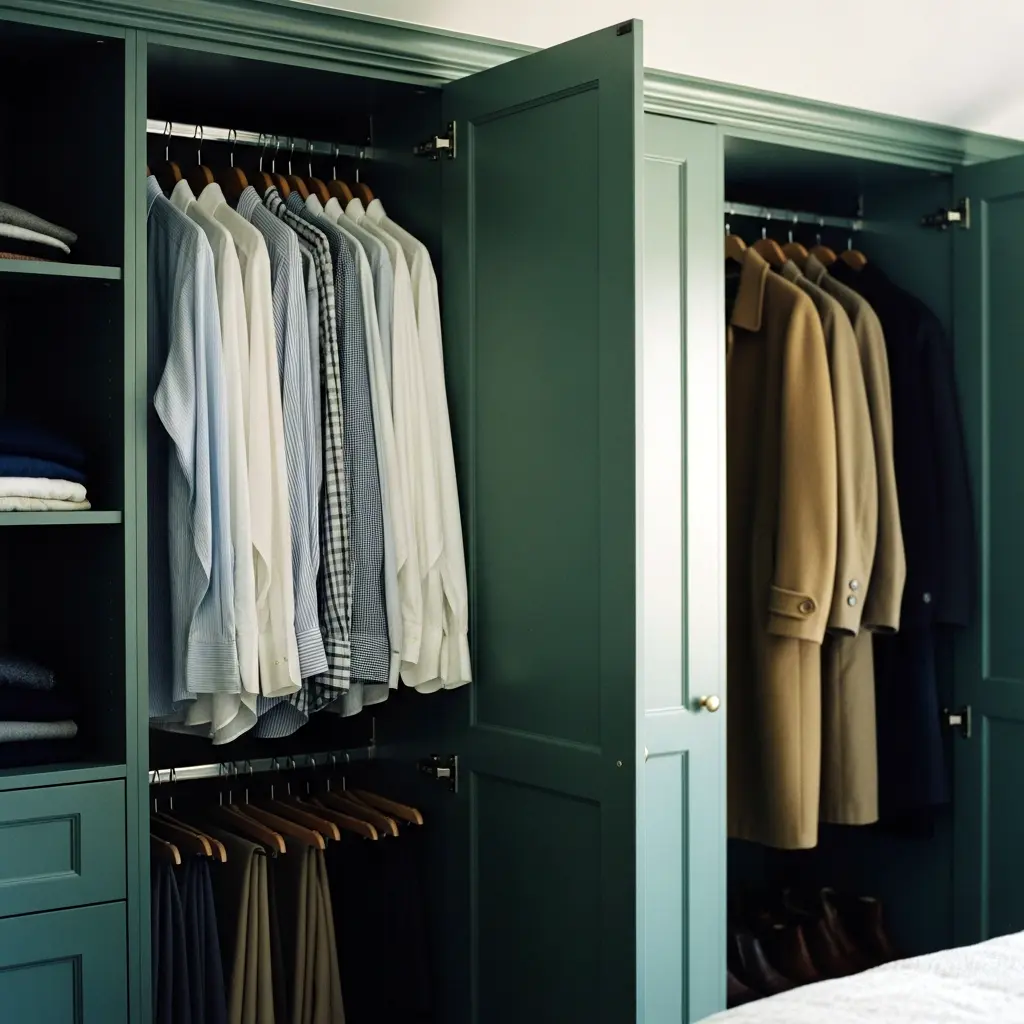
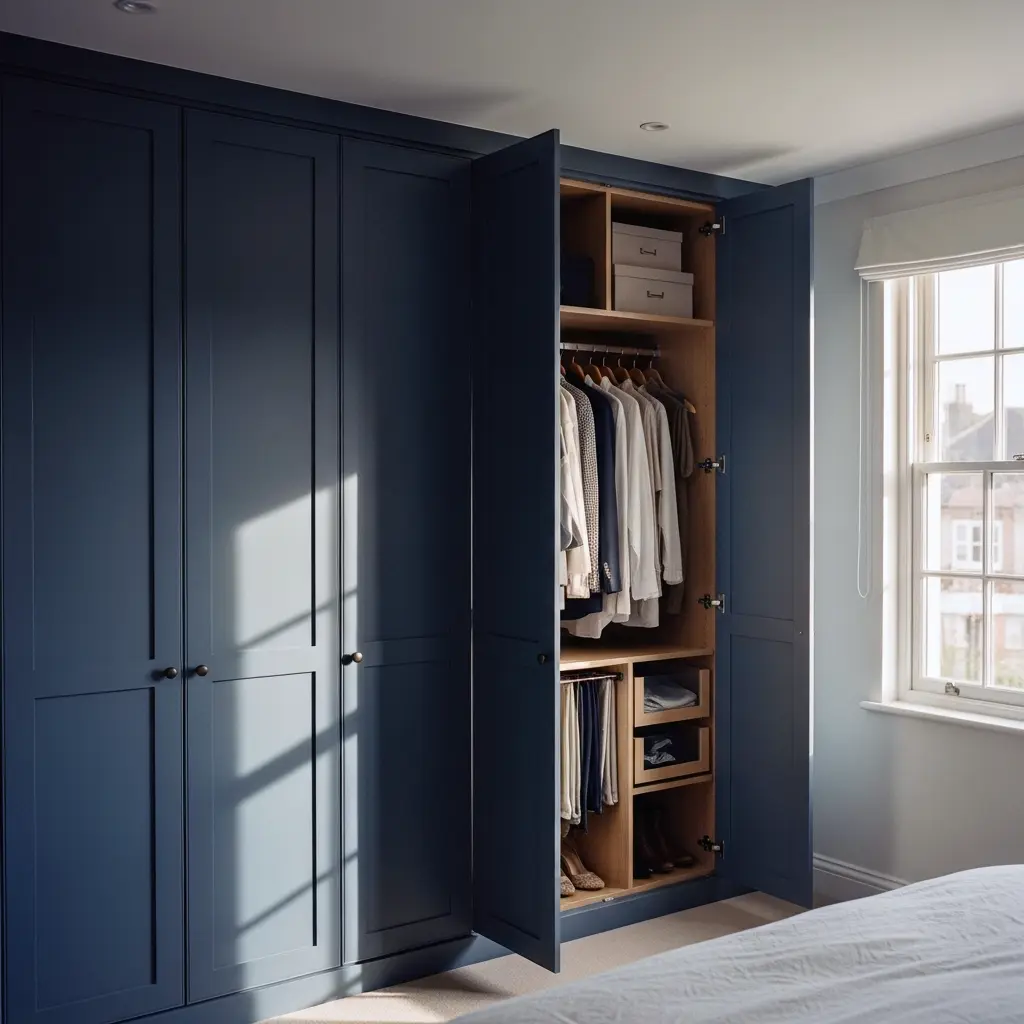
4. Balance Hanging and Folded Storage
Too much emphasis on a single area of a wardrobe leads to failure.
Excessive hanging creates excessive unused volume. Excessive drawer use results in an interior that feels cluttered and confined.
A typical well-balanced wardrobe interior has:
- Space to hang shirts, jackets, dresses, and coats
- Drawers for t-shirts, knitwear, underwear and casual clothing
- Shelves (open) to provide flexibility for future changes
Your lifestyle will determine how much you need of each, so this is where bespoke interior design provides greater long-term success than ‘off-the-shelf’generic designs.
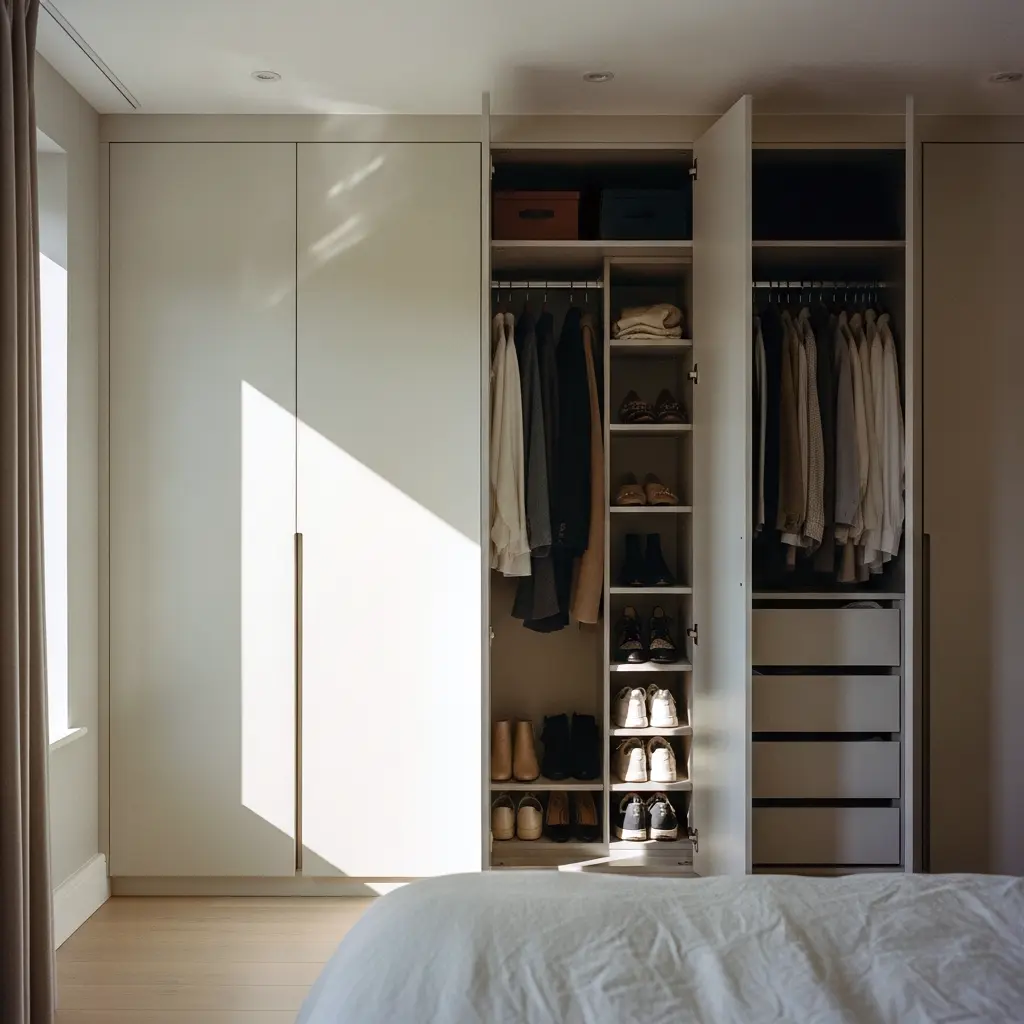
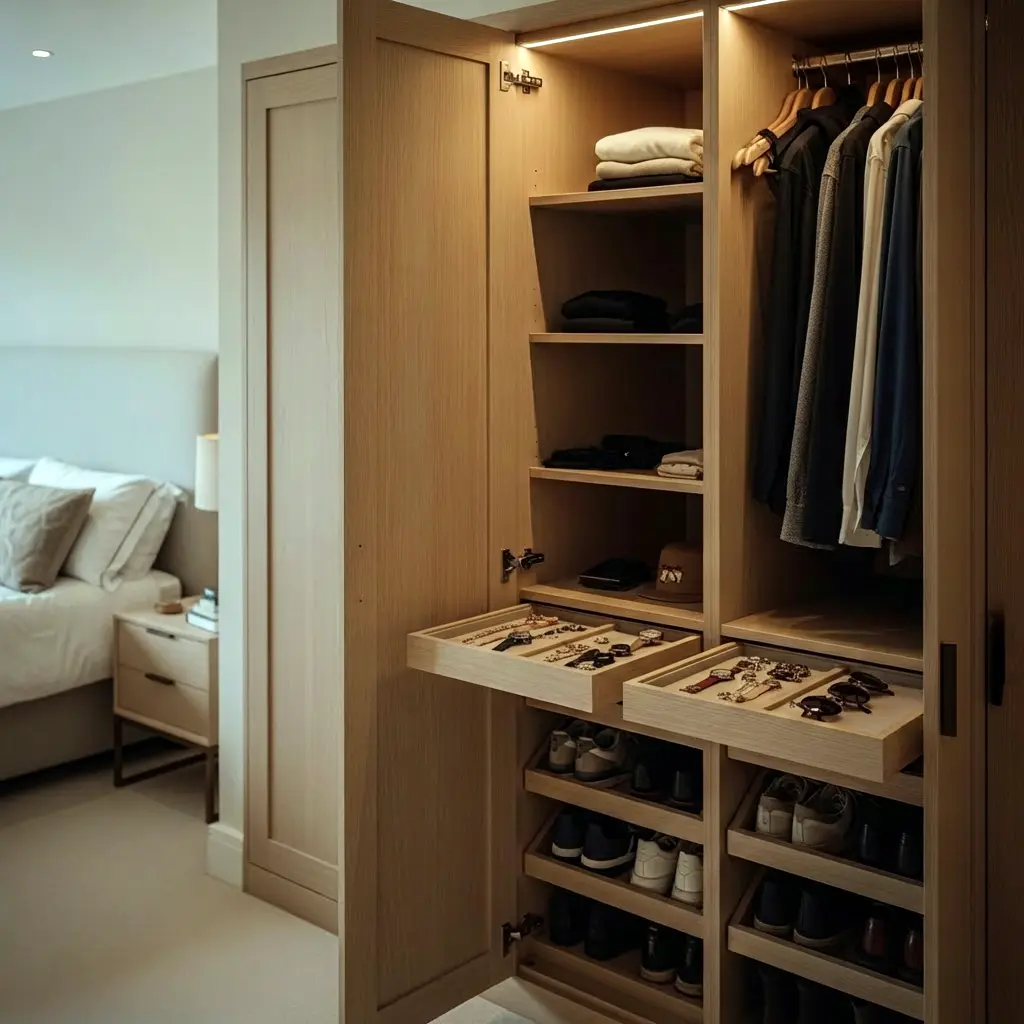
5. Give Shoes and Accessories Proper Consideration
Shoes and accessories are often treated as an afterthought, leading to cluttered floors and overfilled shelves.
Thoughtful solutions include:
- Pull-out shoe racks or angled shoe shelving
- Shallow drawers with internal dividers for smaller items
- Dedicated sections for belts, ties, watches and jewellery
Planning these areas from the outset helps preserve order and keeps the wardrobe looking considered rather than chaotic.
6. Think About Light, Visibility and Access
A wardrobe interior should be effortless to navigate.
Good planning considers:
- Clear sightlines across the interior
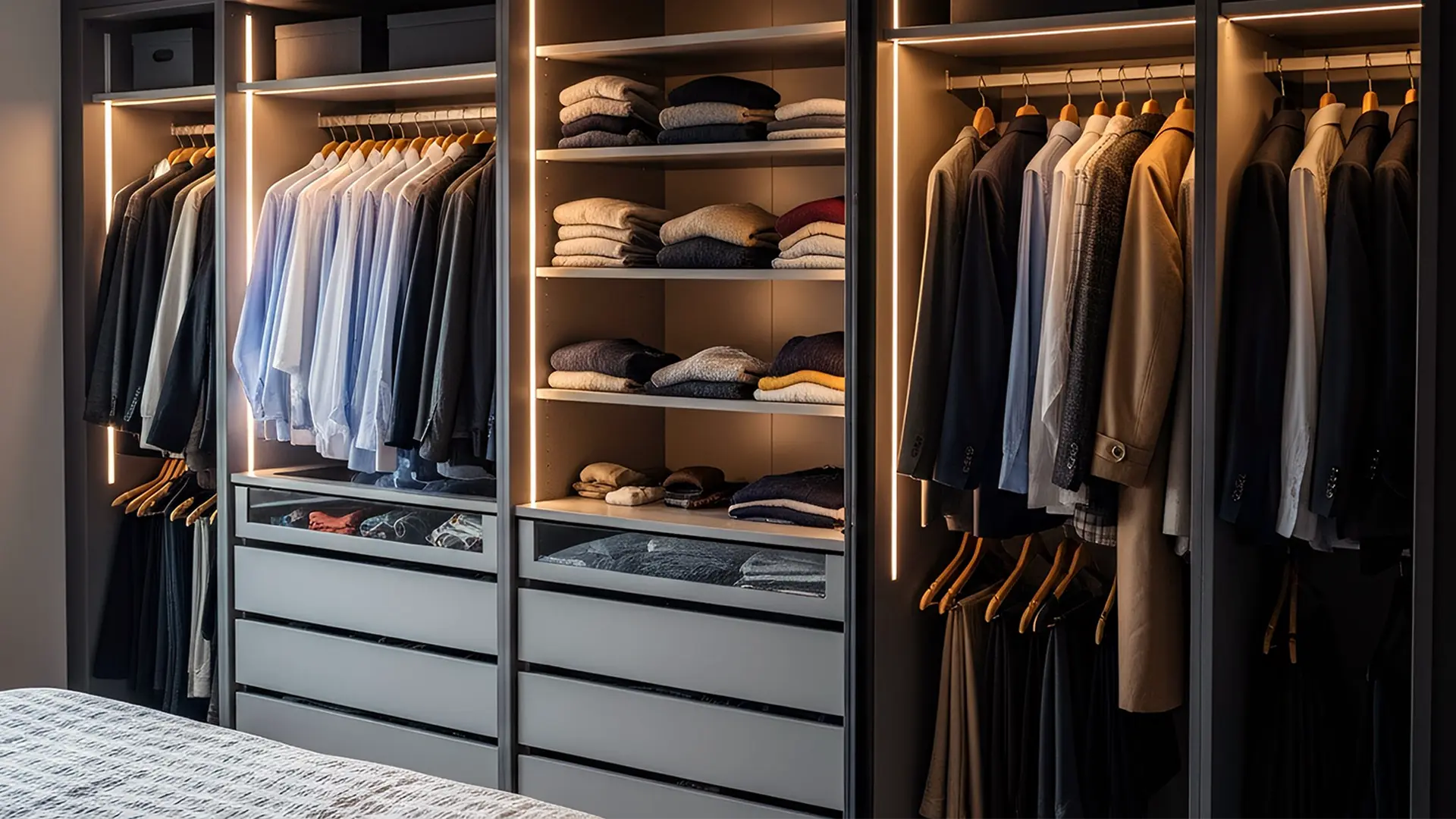
- Internal lighting to improve visibility, especially in deeper sections
- Frequently used items are positioned between the waist and eye level
Poor access leads to wasted space – regardless of how refined the cabinetry may be.
Latest Reviews
See what our customers are saying about us – take a look at our latest Google Reviews below…
From start to finish the service we received was so professional. The quality of the kitchen is simply outstanding. Steph was very knowledgeable about kitchen design and decor.
Lesley Burton
Excellent, professional service from design to completion. All stages ran as smoothly as they could with all trades arriving when they said they would and carrying out work to the highest standard.
Dale Robinson
I recently had my new kitchen completed by Matthew James Kitchens. I wanted something traditional to suit the feel of my house.
Shane Higgins
Our kitchen has been finished over a month now, and we are delighted with the outcome ! Matt and Steph kept in touch massively during the build, with Eiv, who installed the cabinets etc.
Morris Coleman
Amazing products & service from the whole team, from coming out to visit & measure up, the selection of kitchen & accessories, keeping us up to date with what's going to happen when, through to the actual install, cant recommend them enough.
Ross Hill
7. Allow for Change Over Time
A wardrobe should be able to support you in the long term, and therefore it should be future proofed rather than simply functional at the time of installation.
Examples of how this can be achieved could be:
- The inclusion of adjustable shelving units, which will allow flexibility when required.
- The provision of a limited quantity of spare capacity in the wardrobe so that further items may be added in the future.
- Internal finishes to the wardrobe (e.g., paint, veneer, etc.) that remain neutral and do not go out of style.
This guarantees that your wardrobe continues to meet your needs over the course of your changing lifestyle.
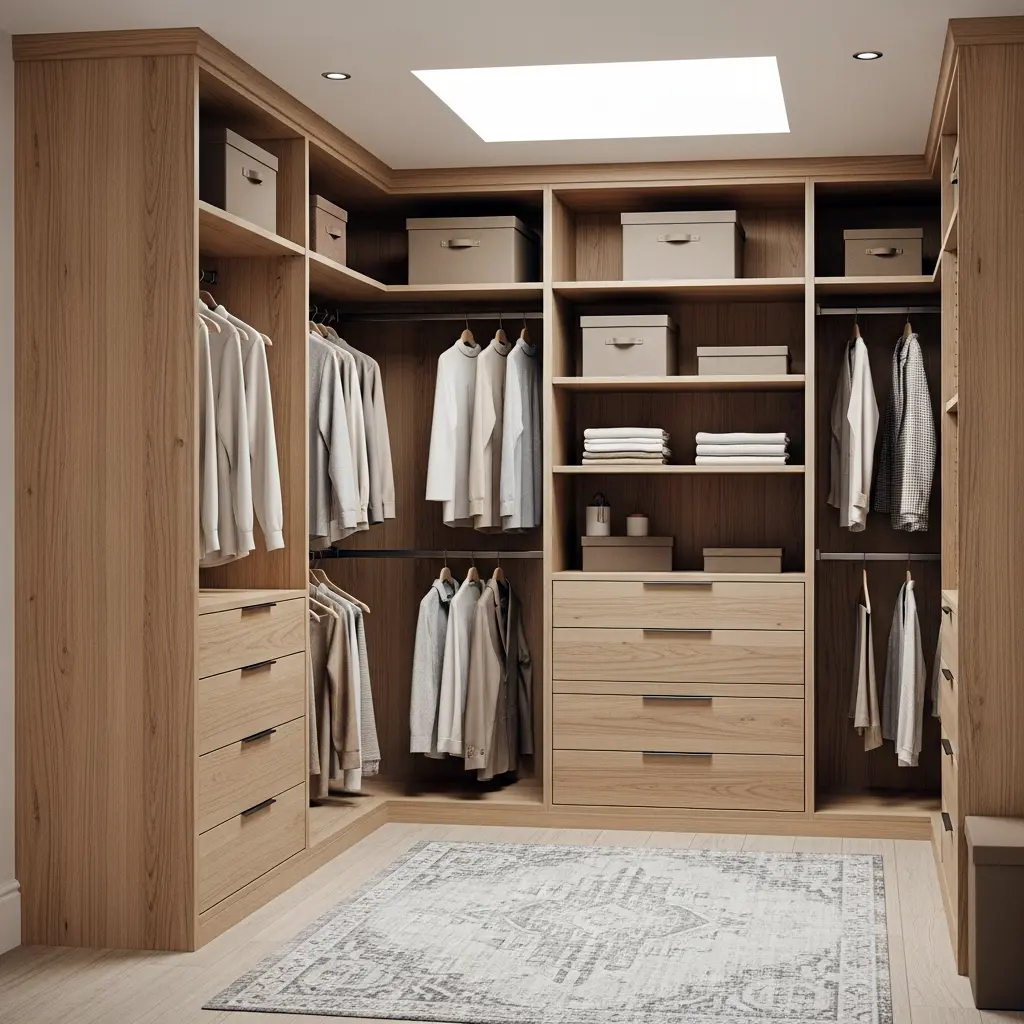
Planning Wardrobe Interior Space Around Real Life
It is essential to think about the way you live in addition to the measurement of the space and fittings when designing the interior of a wardrobe. The best wardrobes are those that have been designed with how you dress and what you access on an everyday basis, and how well the space will help you develop your own habits and routines.
Our article on wardrobe interiors designed around real life explores why one-size-fits-all layouts so often fall short, and how bespoke interiors create calmer, more intuitive storage that genuinely improves everyday living.
Why Bespoke Planning Makes the Difference
When you’re designing a bedroom wardrobe, you should NOT solely focus on getting as much storage as possible; you want to create storage that is intuitive and easy to use.
At Matthew James Kitchens, we provide a customised approach to interior wardrobe designs around you: based on how you like to get dressed, the way you live, and where you live. Each of our bespoke fitted bedrooms in the West Midlands is carefully designed, expertly crafted and will stand the test of time.
👉 Learn More About Our Bespoke Fitted Bedroom Design & Installation Service
FAQs
How do I plan a wardrobe interior properly?
Start by looking at how you actually use your wardrobe day to day. Identify what you hang, what you fold and which items you reach for most often. The internal layout should then be designed around those habits, rather than relying on standard, one-size-fits-all configurations.
What is the best wardrobe interior layout?
The best wardrobe interior layout balances hanging space, drawers and shelving in proportion to your clothing. Dividing the interior into clear zones for garments, shoes and accessories improves organisation and makes the wardrobe easier to use on a daily basis.
How much hanging space do I need in a wardrobe?
The amount of hanging space you need depends on the type of clothing you own. Most people benefit from a combination of long-hanging space for coats and dresses, alongside shorter rails for shirts and jackets. Bespoke wardrobes allow rail heights to be tailored precisely to your garments.
Are bespoke wardrobe interiors better than standard ones?
Yes. Bespoke wardrobe interiors are designed around your room, your lifestyle and your storage needs. Unlike standard systems, they reduce wasted space and ensure every shelf, drawer and rail has a clear and practical purpose.
What should I include inside a fitted bedroom wardrobe?
A well-planned fitted bedroom wardrobe typically includes a considered mix of hanging space, drawers and shelving, along with dedicated storage for shoes and accessories. Optional features such as internal dividers and lighting can further improve organisation and ease of use.
Birmingham Showroom
Matthew James Kitchens, 770 - 772 Hagley Road West, Birmingham, B68 0PJ
Call on: 0121 271 0808
Bromsgrove Showroom
Matthew James Kitchens, Unit 38, Wildmoor Mill, Mill Lane, Bromsgrove, B61 0BX