
Practical Advice for Your Bespoke Kitchen
Selecting the perfect kitchen sink is one of the final decisions that you make when planning a kitchen that not only looks stunning but will work around your everyday routines. Whether you’re looking for a sink to fit into your new bespoke kitchen or you are replacing an old sink as part of a kitchen refurbishment project, our guide to choosing kitchen sinks will help.
With over two decades of experience creating kitchens locally, our knowledgeable team can advise on which sink will complement your bespoke kitchen cabinets and worktops. This advice takes into consideration your lifestyle and cooking habits, so you can be sure to invest in a sink that is right for you. Here is our kitchen sink buying guide.
At a Glance
- Stainless steel sinks are durable and easy to maintain. We also offer ceramic sinks, composite sinks and enameled cast iron sinks.
- Select from inset sink options, undermount sinks and Belfast sinks best to match your kitchen’s design and work surface.
- Depending on your lifestyle and kitchen workflow, you may want different bowl configurations, sizes and accessories.
- Consider the installation type and number of tap holes you’ll need to ensure they will fit your kitchen worktop and tap configuration.
- The right sink will not only be functional, but will also help finish your kitchen’s design without clashing.
Understanding Kitchen Sink Materials
Material options affect the longevity, maintenance and appearance of your kitchen sink. Here’s a quick guide to the most common materials we supply, along with their key benefits:
Stainless Steel Sinks
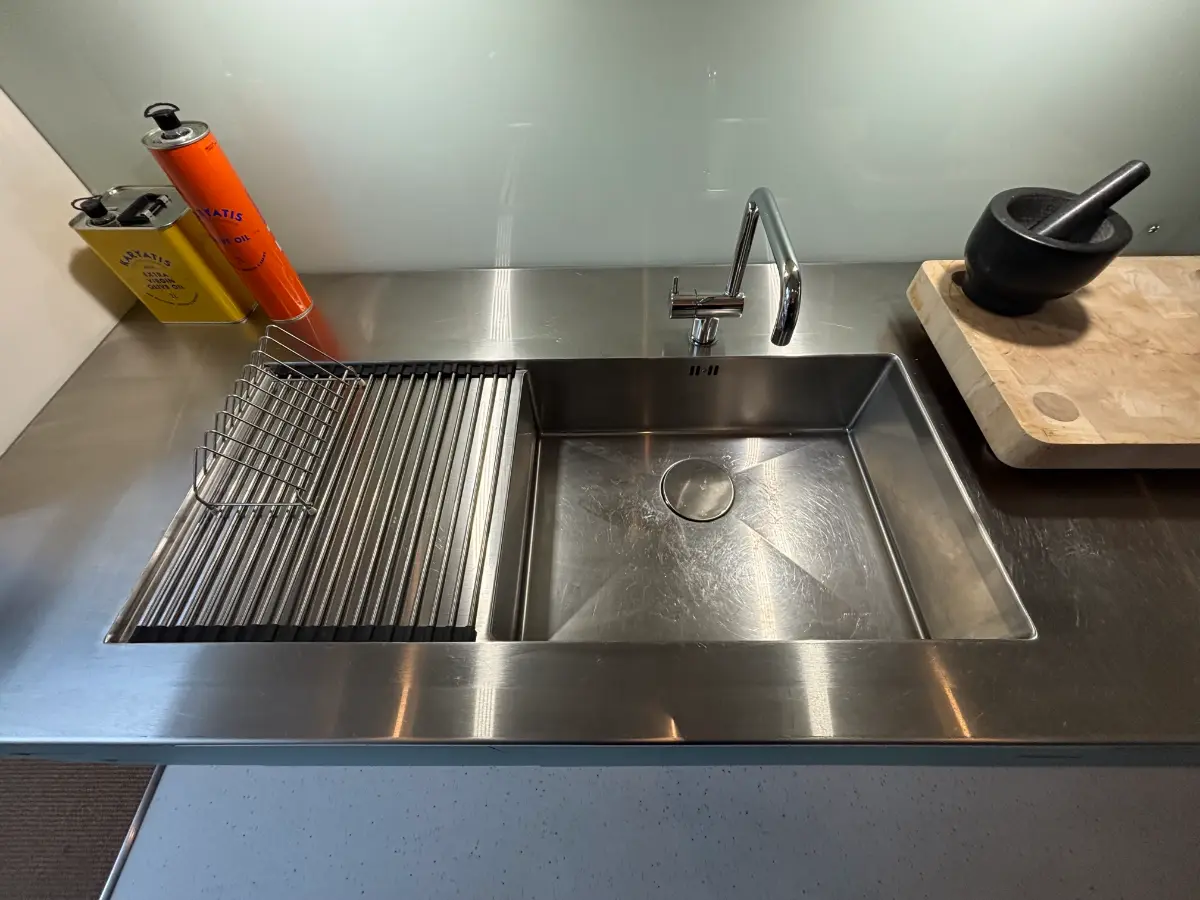
Stainless steel kitchen sinks. Stainless steel sinks are a popular, practical option and are easy to keep clean. Stainless steel is strong and stain resistant, but isn’t as scratch resistant as other materials and can become dull if stains set. With the right care and maintenance, you can minimise damage.
Stainless steel has a sleek look with a slight mirror-like finish. This works well with modern kitchens, creating a minimalist aesthetic that complements high-end appliances such as BORA or Siemens. Stainless steel sinks can be installed as an inset or undermount.
Ceramic Sinks
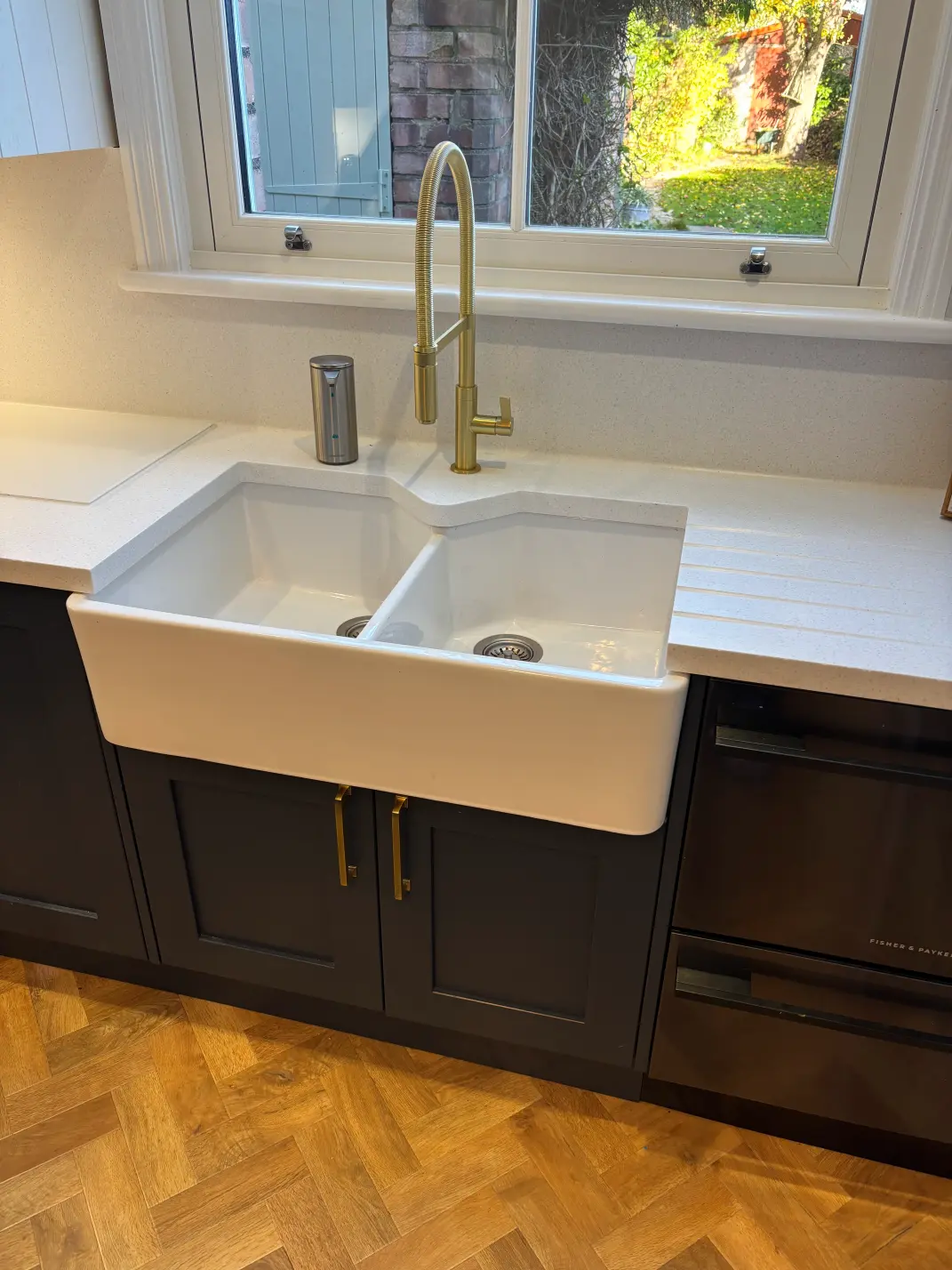
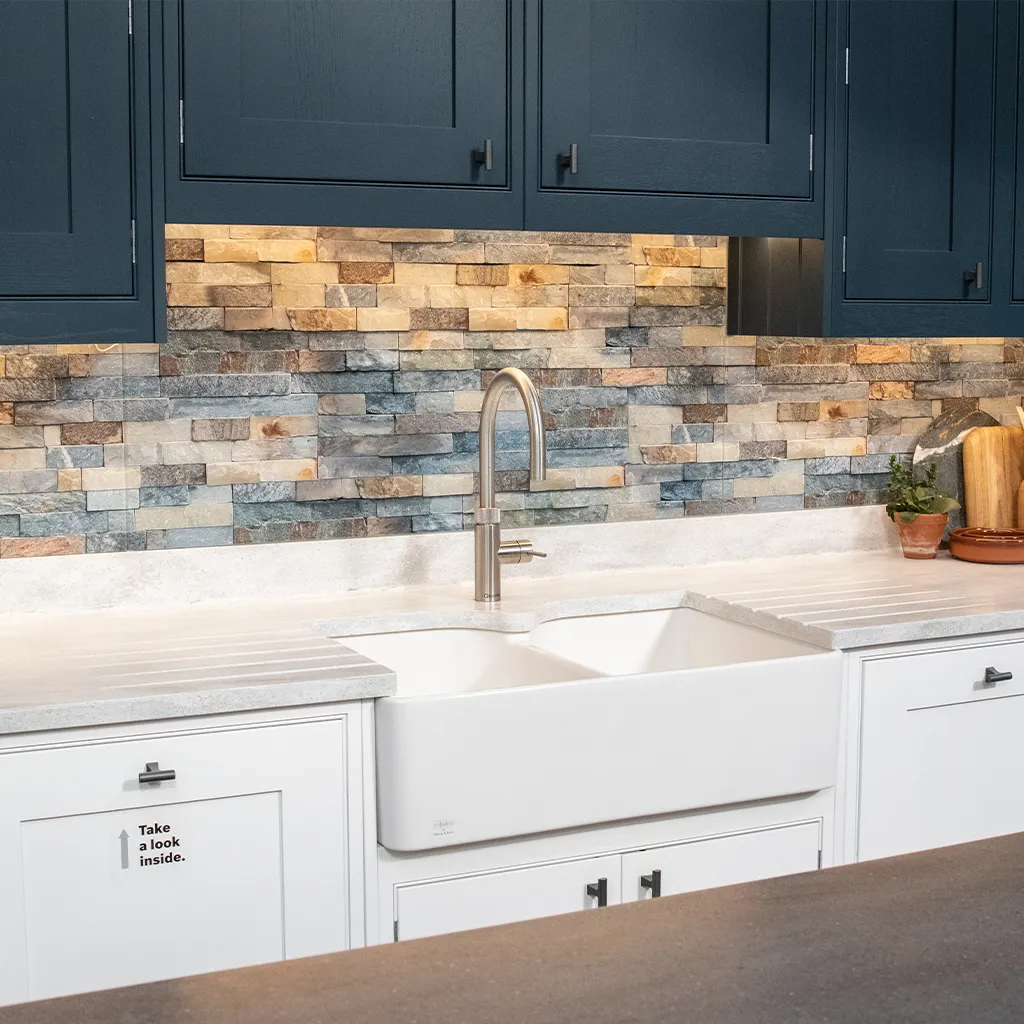
A ceramic sink is a stylish classic that gives you a heat-resistant, stain-resistant, scratch-resistant and chemical-resistant sink. They come with a timeless, traditional style which is perfect for farmhouse style or traditional kitchens throughout the home. White ceramic sinks give kitchens a clean, crisp look. They also look great against natural stone work surfaces like Silestone or Dekton countertops. If your sink does become chipped or cracked, Ceramic sinks can be costly to repair. Please handle with care.
Composite Sinks
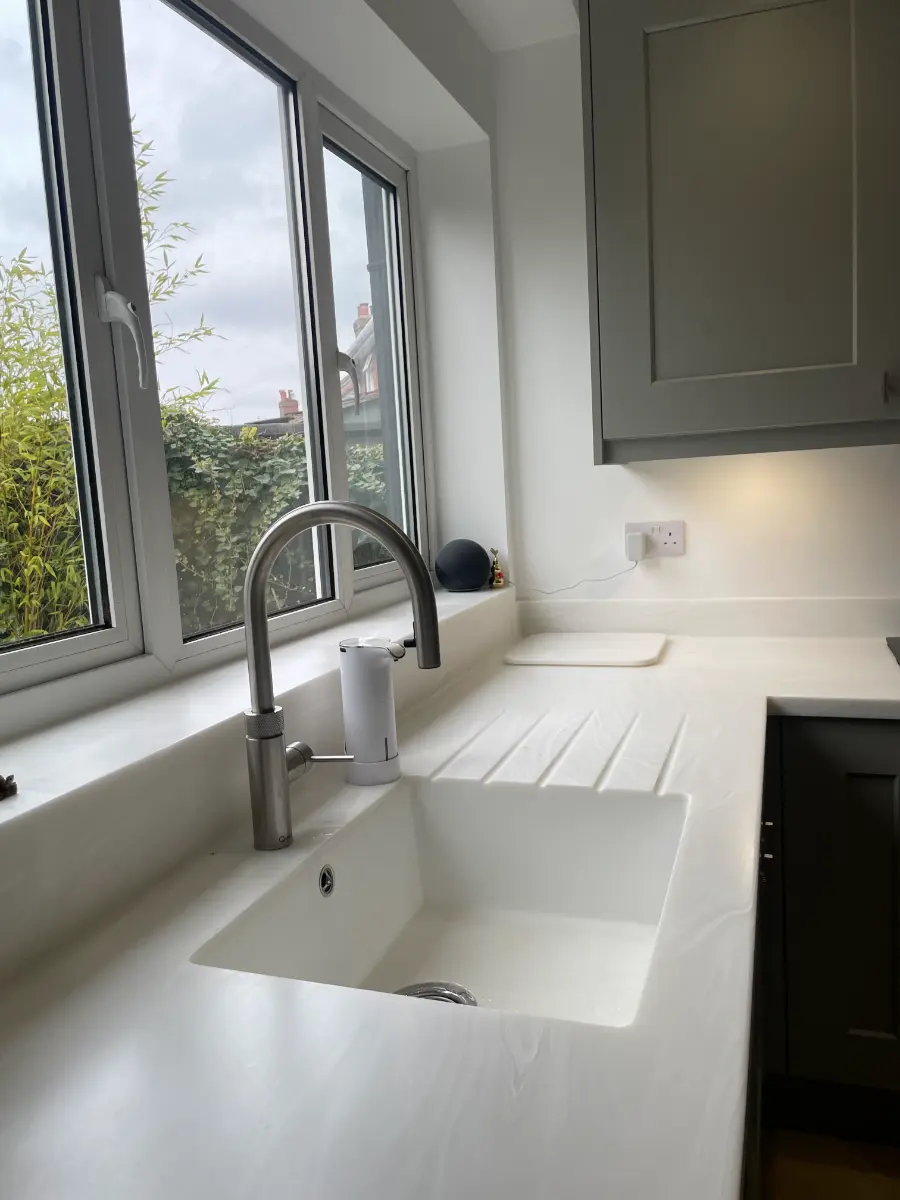
Granite composite sinks are one example of composite sinks. The crushed stone is mixed with resin to form a durable and long-lasting material. Because of this, composite sinks are heat resistant and scratch resistant. Composite sinks are available in many colours and finishes so that you can match your sink to your cabinets and worktops. Scratches and stains aren’t a problem for solid surface composite sinks. Made from a blend of acrylic resin, these sinks offer a seamless finish. However, repairs can be difficult if damage occurs.
Enameled Cast Iron Sinks
Enameled cast iron sinks are durable and traditional, with good heat resistance. The smooth enamel surface is stain resistant and feels heavy and sturdy. This sink works well with classic kitchens or if you want a period feel. These sinks can chip if hit hard enough, so keep your kitchen lifestyle in mind when weighing your options. Traditionally, many sink styles are offered in enameled cast iron, such as Belfast sinks or butler sinks.
Types of Kitchen Sinks by Installation
How your sink is fitted affects both the look and functionality. There are three main types:
Inset Sinks
Inset sinks are the most popular type of sink and are fitted by cutting out a section of your worktop and fitting the sink into it. This leaves a slight lip around the perimeter of the sink, which helps to contain any spillages. They work well with most worktop materials and kitchen styles. They also offer an easy way to install and replace your sink.
Undermount Sinks
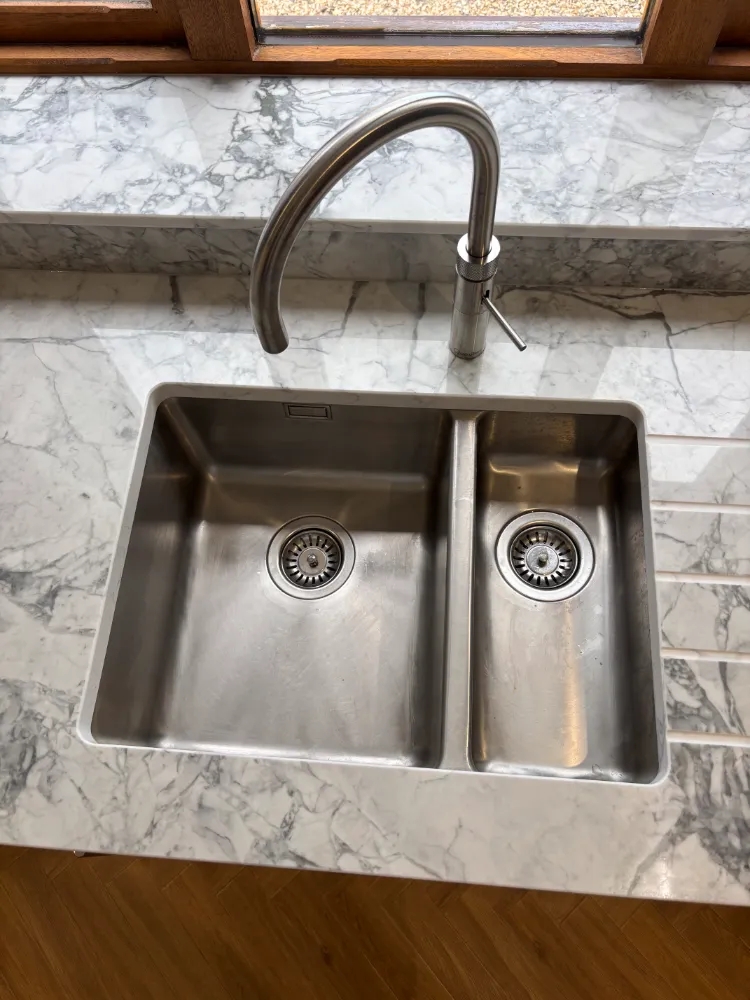
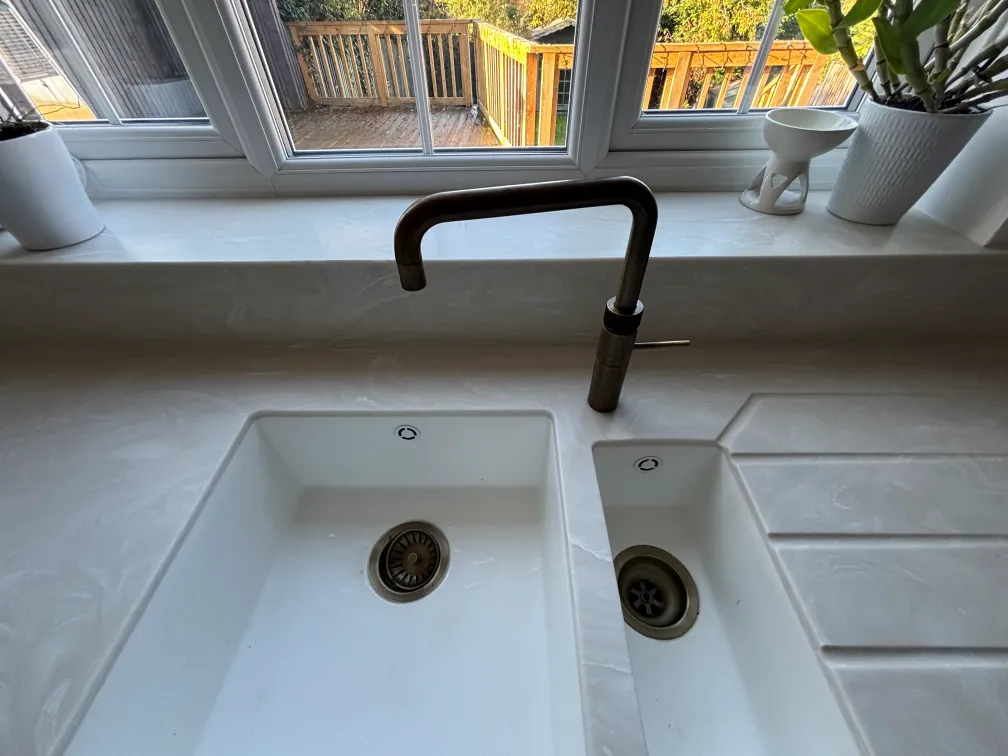
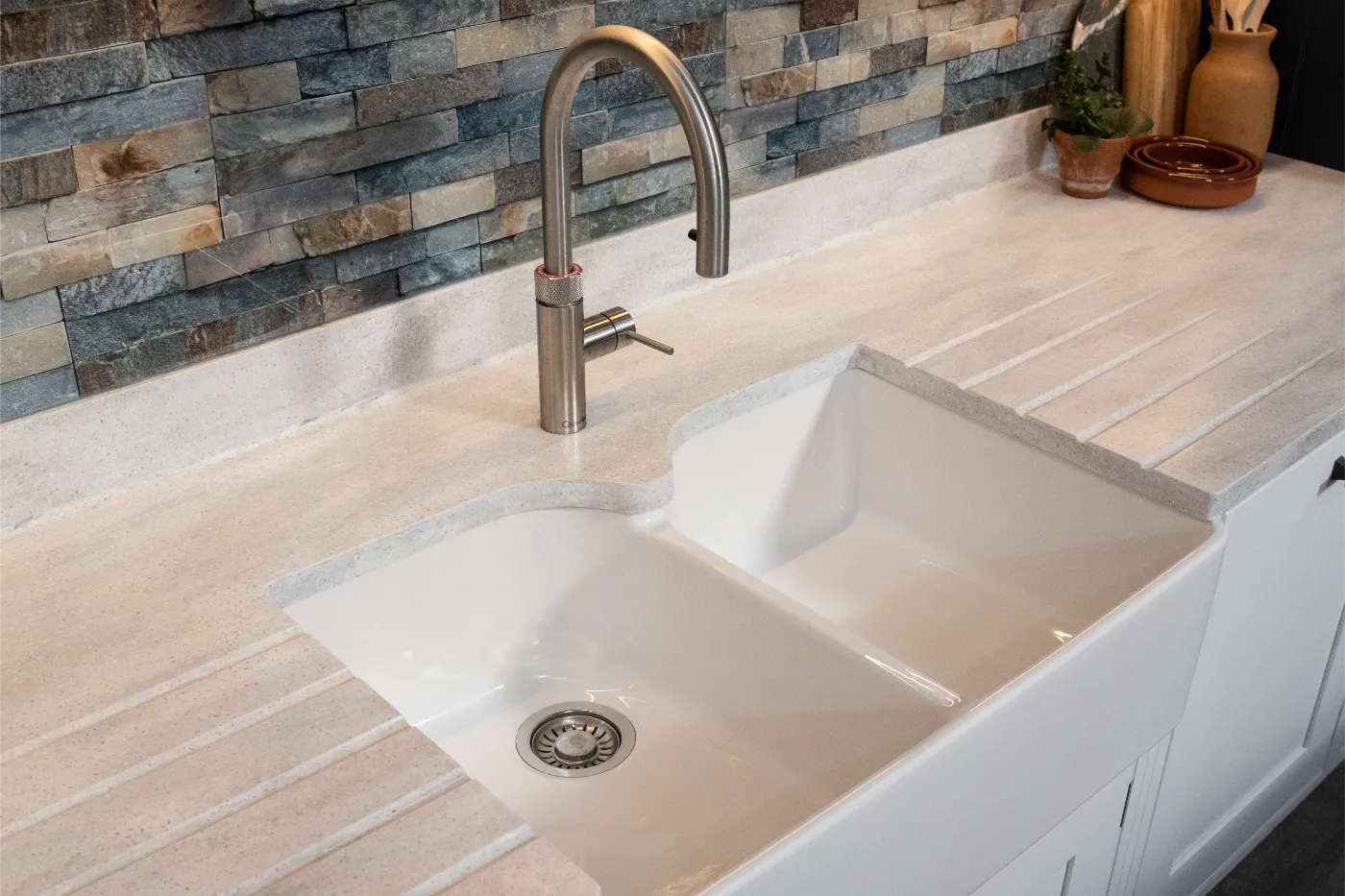
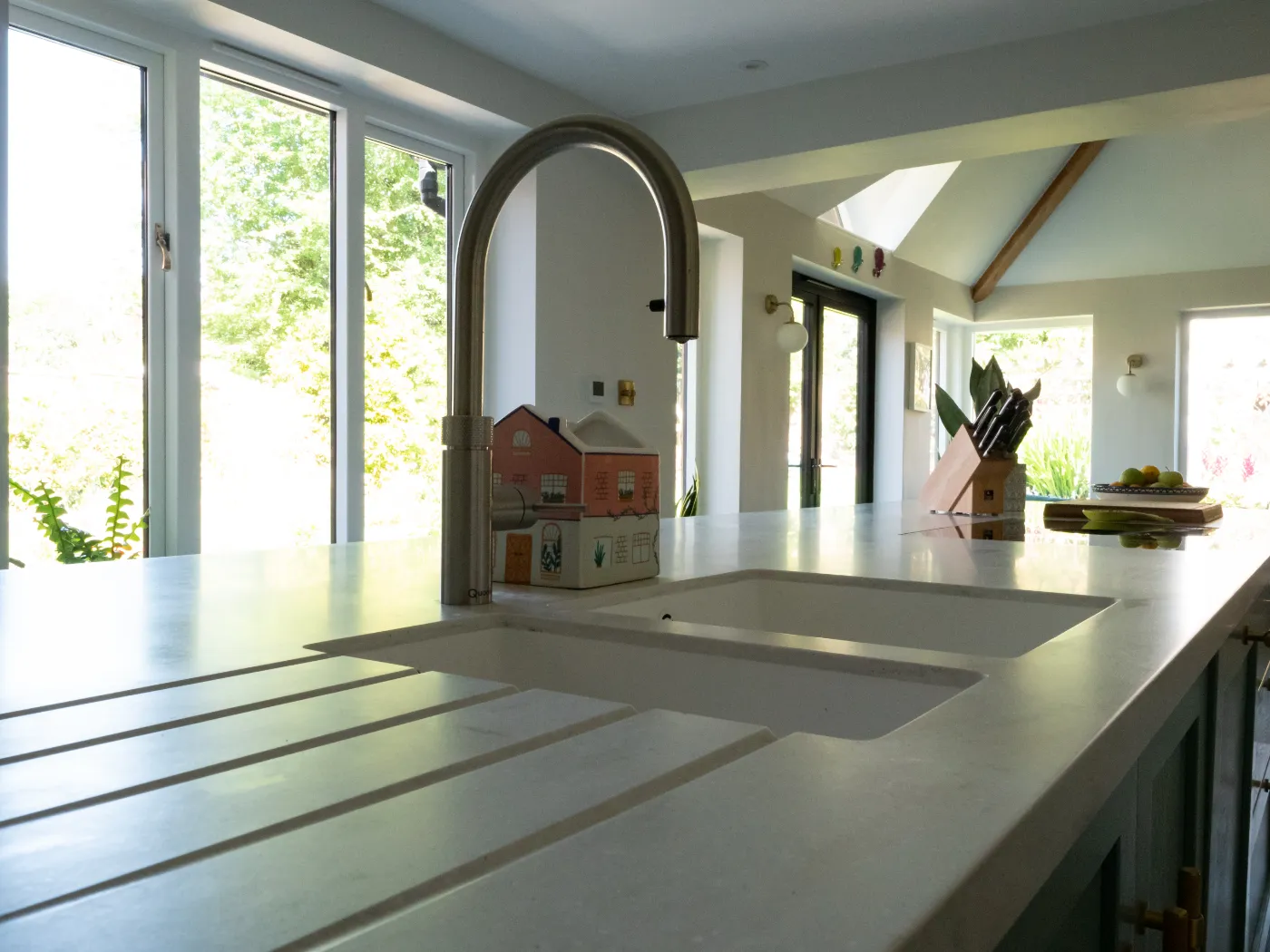
Installed under the worktop surface, undermount sinks join the sink to the work surface with a smooth transitional curve. Undermount sinks are becoming common in modern kitchens fitted with solid surface or natural stone worktops like Silestone or Dekton. They make washing up easier by allowing you to sweep food and debris from your countertop directly into the sink basin.
Belfast Sinks
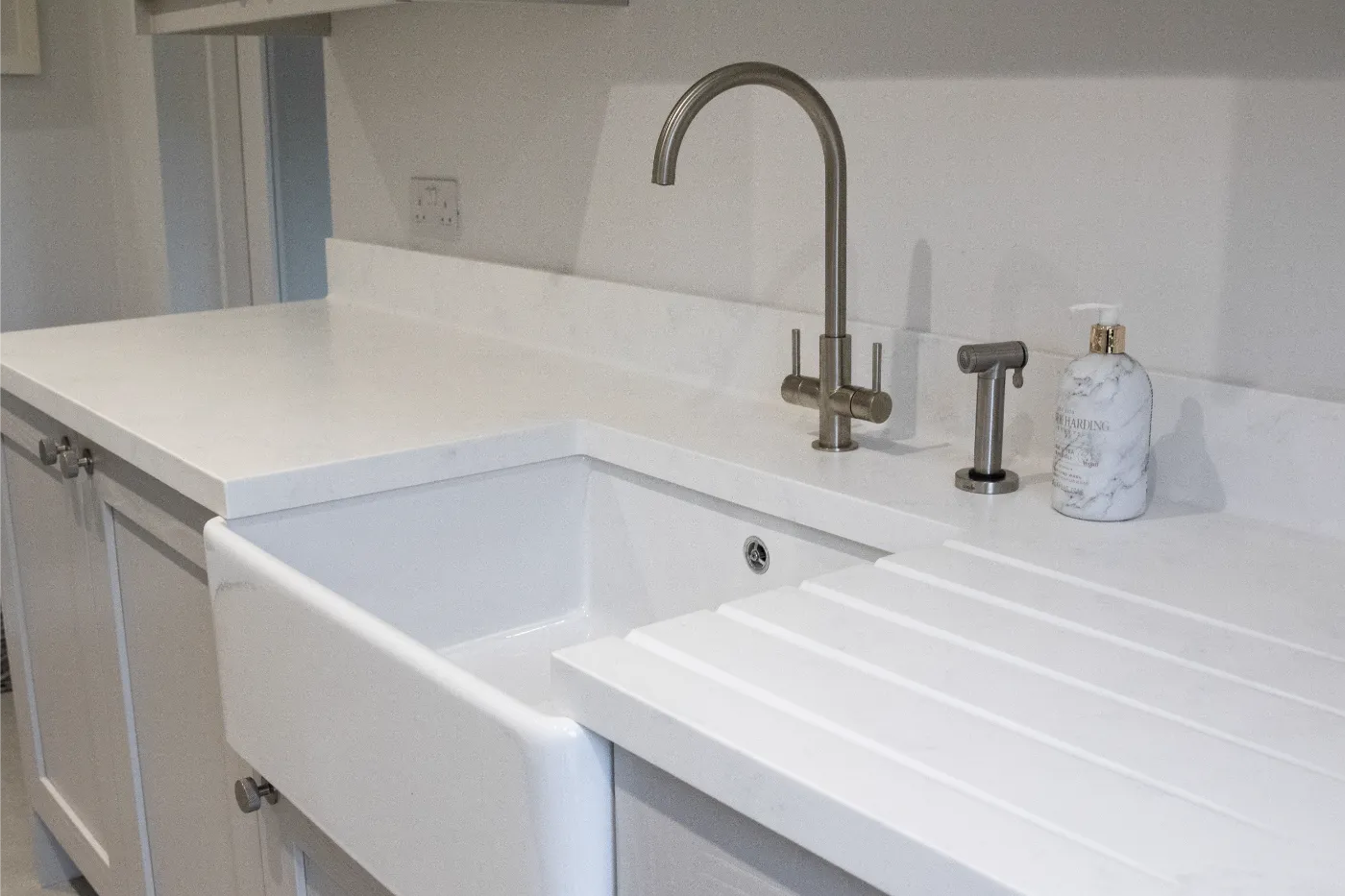
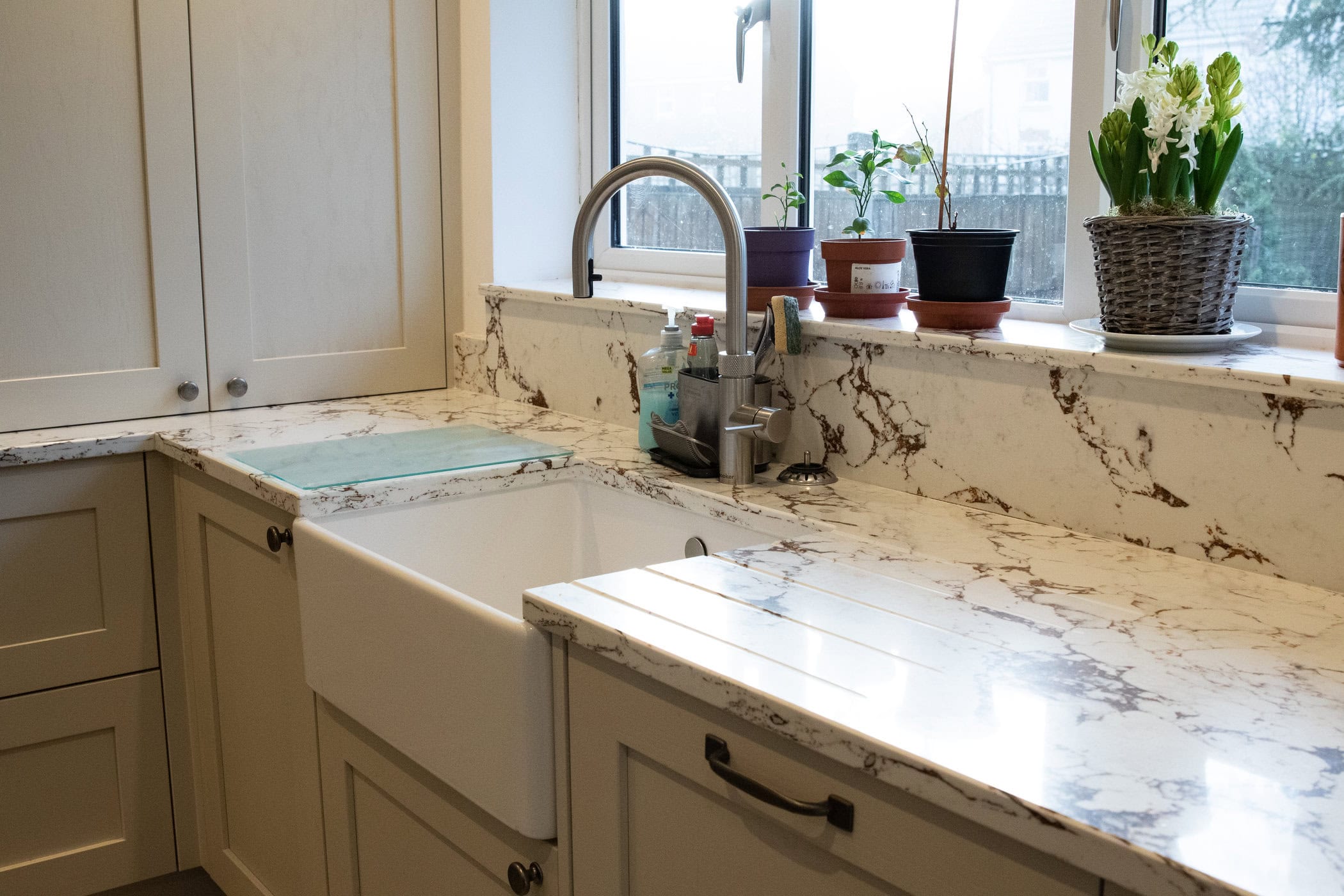
Belfast sinks, also referred to as butler sinks, are deep ceramic or enameled cast iron basins that rest on top of the kitchen cabinet. These sinks are typically found in farmhouse or traditional style kitchens. They’re a great option if you love big, deep sinks with a lot of character. Belfast sinks provide plenty of room for washing oversized pots and pans.
Choosing the Right Sink Size and Bowl Configuration
- Single bowl sinks: Best for smaller kitchens or limited counter space, single bowl sinks are great because they do not take up too much space and still allow room to efficiently wash dishes and prepare food in the sink.
- 1.5 bowl sinks: This type of sink typically consists of one large sink bowl with an adjoining smaller sink bowl. They give you the added workspace of a double sink without taking up too much extra counter space. The extra space is great for rinsing dishes or preparing food.
- Double bowl sinks: Double bowl sinks come with two sink bowls. They allow you to multitask in your sink. You could fill one sink with soapy water to soak dirty dishes while using the other to rinse food or clean dishes. These are ideal if you have a larger kitchen with lots of counter space.
Depth is important to consider as well. Deeper sinks allow you more room to fit larger pots or conceal dirty dishes from view. However, deeper sinks may limit your storage space inside your kitchen cabinet. They can be tough on your back if you don’t take ergonomics into consideration.
Key Considerations When Choosing Your Kitchen Sink
- Intended use: How frequently do you intend to use the sink? And what do you want to use it for? Washing oversized cooking dishes like pots and pans? Then opt for a large sink with a draining board.
- Kitchen style: Are you renovating a modern kitchen or a traditional kitchen? Select a stainless steel sink for a modern kitchen. If your kitchen has more of an old-world charm, then go for a ceramic sink or a Belfast sink.
- Sink Mounting Type & Worktop Materials: The mounting of your sink will depend on the type of worktop you have and how you want it fitted.
- Tap hole spacing: You need to consider what type of kitchen taps you would like. Your sink will have pre-drilled holes. These need to line up with your chosen tap(s). There are also sinks with taps that have pull-out sprays.
- Available space & Cabinet dimensions: The space you have available and the dimensions of your sink cabinets will dictate how big your sink can be and how many bowls you can have.
- Accessories: If you want extras like built-in draining boards, a chopping board ledge, a drying rack or a waste disposal unit.
Enhancing Functionality with Sink Accessories
With add-ons and accessories, a contemporary kitchen sink can be customised for your needs:
- Draining boards – Many sinks offer a draining board area adjacent to your basin, which is sloped to allow for air drying cutlery and plates, keeping your countertops dry and organised.
- Bespoke ledges – fitted directly to your sink, these convenient additions create more room for cutting boards, colanders or draining racks, freeing up valuable workspace and streamlining your kitchen routine.
- Waste disposers – Installed into most sinks, these items grind away food scraps into smaller particles that are easily washed down the drain, keeping your kitchen clean and reducing waste.
- Kitchen tapware – from pull- out sprayers to filtered water taps, there are many choices to enhance your sink and optimise usability.
- Sink Accessories – Universal or made-to-measure accessories like racks, colanders and drain baskets.
Planning Your Kitchen Sink Installation
Will your new sink replace an existing one, or is it being fitted as part of a brand new kitchen design project? Your decision may determine the size of the sink you choose and whether you go for a free standing sink or one that is built into your kitchen worktop. We offer a professional installation service. Our teams take great pride in fitting your new kitchen sink, ensuring a perfect fit with your kitchen cabinets and work surfaces, creating a watertight seal and long lasting finish.<
Maintaining Your Kitchen Sink
Your sink will last longer and look better with a little care, no matter what it is made of:
- Stainless steel: Wash your sink regularly using a non-abrasive cleanser. Dry with a soft towel to avoid water spots. Steel brushes or harsh cleaners will scratch the sink.
- Ceramic: Avoid chipping your sink by knocking heavy pans around in it. Clean with a mild detergent. There is no need to reseal your sink every year, as with porcelain tiles. Check with your manufacturer’s instructions, though.
- Composite: Wash your sink using a mild non-abrasive cleanser. Keep cleaners that contain harsh chemicals away from your sink, as they will dull the finish. Though heat resistant, don’t abuse your sink by placing piping hot pans in it.
- Enameled cast iron: Regular wipe downs of your sink will prevent stains. Dishwasher detergent works great in these sinks. Don’t bang your sink and chip the enamel.
Common Mistakes to Avoid When Selecting a Kitchen Sink
Buying a kitchen sink can be more complicated than just choosing something that appeals to you. Here are some common mistakes people make when purchasing a kitchen sink:
- Wrong cabinet size: Purchasing a sink that is too big for your cabinet will cause many problems during installation and limit your storage options.
- Incorrect taps: Failure to check where the tap holes are can result in expensive modifications or even purchasing a new sink or tap.
- Forget about ergonomics: A sink that is too deep for your height can result in a strained back after using it for long periods.
- Incompatible materials: Certain sinks do not go well with some materials. (i.e, Undermount sinks are not ideal for laminate worktops)
- Not hiring a professional: Sinks that aren’t fitted properly can leak and result in damage to your worktops or cabinets.
Cost and Value Considerations
Price shouldn’t be the only factor when deciding on your kitchen sink. Material quality means less mess and worries about future repairs or replacements. Professional installation means your sink lasts longer and looks great year after year. And of course, think about how you’ll use your new sink every day.
Your dream kitchen sink should fit your lifestyle and your kitchen décor. Search our directory of suppliers that use top quality materials and skilled craftsmen to create your dream kitchen sink. Not only will you be happy with your investment, but you will also understand why our prices are what they are. We provide upfront pricing and scope of work before we begin the process, so you know exactly how much your custom kitchen sink will cost.
Frequently Asked Questions
What Is the Best Sink Material for Durability?
Every sink material offers durability, but each has different benefits. Stainless steel sinks are strong and easy to keep clean, although they can scratch over time. Ceramic sinks are heat resistant and less likely to scratch, but they can chip if hit with a hard object. Composite sinks are designed to be heat and scratch resistant, while enamelled cast iron sinks are long-lasting and have a traditional look, but may also chip if struck with force.
How Do I Choose Between Inset and Undermount Sinks?
Inset sinks are fitted on top of the worktop and have a visible lip, making them suitable for many different kitchen styles and materials. Undermount sinks are installed beneath the worktop, creating a cleaner and more seamless look. They are especially popular with stone or solid surface worktops. The right choice will depend on your kitchen style, worktop material and how easy you want the surface to be to clean.
What Sink Size Is Best for a Small Kitchen?
Smaller kitchens usually work best with a single bowl sink. If you need extra space for rinsing or food preparation, a 1.5 bowl sink can be a practical option without taking up too much additional room. Always measure your cabinet and worktop space carefully to make sure the sink will fit properly.
Can I Add a Waste Disposal Unit to My Sink?
Waste disposal units can often be added to kitchen sinks, depending on the sink, cabinet space and plumbing setup. If you are unsure what will work in your kitchen, speak to your kitchen designer or installer for advice before choosing your sink and fittings.
How Important Is Matching the Tap Hole Configuration?
Your kitchen taps should match the number and position of the holes in your sink to make installation straightforward. Some sinks come with pre-drilled tap holes, while others can be drilled to suit your chosen taps. Checking this before ordering helps avoid fitting issues later.
Are Undermount Sinks Suitable for All Worktops?
Undermount sinks are best suited to granite, quartz, Silestone, Dekton and other non-porous surfaces. They are not usually recommended for laminate worktops, as water can damage the material underneath if the edges are exposed. Your worktop material should always be considered before choosing an undermount sink.
What Is a Belfast Sink and Why Choose One?
A Belfast sink, sometimes called a butler sink, is a deep ceramic or enamelled cast iron sink that sits on top of the kitchen cabinet. It provides plenty of room for washing dishes, pots and pans, while adding a classic, old-world feel to the kitchen. Belfast sinks are especially popular in farmhouse and traditional kitchen designs.
Are Composite Sinks Heat Resistant?
Yes, granite composite sinks are generally heat resistant and suitable for normal kitchen use, including hot water and warm pans. However, it is still advisable to avoid placing extremely hot pots directly onto the sink surface, as this can help protect the finish and reduce the risk of damage over time.
Can I Have a Draining Board with an Undermount Sink?
Undermount sinks are usually designed without an integrated draining board to keep the worktop looking clean and seamless. However, a draining area can be built into the worktop separately, or you can choose bespoke sink accessories to create a practical setup that suits the way you use your kitchen.
Next Steps with Matthew James Kitchens
Selecting your kitchen sink is one of the most important considerations when designing your made-to-measure kitchen around your lifestyle. Using local manufacture and an open project process, we create kitchens that blend aesthetics with lasting build quality and kitchen function.
Visit either our Birmingham or Bromsgrove showrooms with your room measurements and kitchen requirements to see our range of kitchen sink materials and talk through your options with one of our expert designers. Alternatively, you can request a callback or free design consultation to begin your kitchen project with us.
Your Next Step to a Bespoke Fitted Kitchen
Visit one of our showrooms with your room measurements and ideas, or book a design appointment. Our professional team will take you through every stage of the design and fitting process to help make your dream kitchen a reality, providing clear costs and exceptional skill. Visit or appointment can be booked by emailing info@matthewjameskitchens.co.uk or by calling Birmingham on 0121 271 0808 or Bromsgrove on 01527 836 985.
- Award-winning designs featured in Beautiful Kitchens magazine
- Over two decades of experience
- Bespoke kitchen designs tailored to individual tastes and lifestyles
- Wide range of styles
- Fully equipped showroom
- Finance options